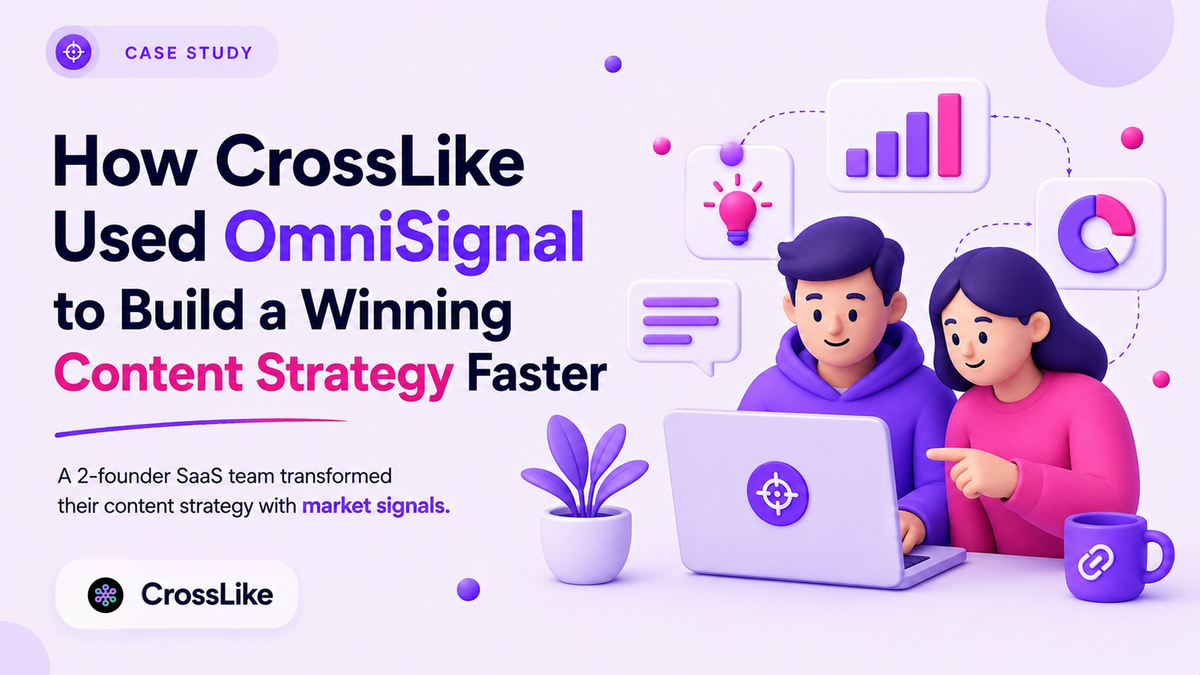
Case Study: How a 2-Founder SaaS Team Used OmniSignal to Build a Winning Content Strategy Faster

Company
CrossLike is a small B2B SaaS company run by two founders. The team helps professionals grow on LinkedIn through smarter engagement and content workflows.
Like many early-stage SaaS companies, CrossLike had limited time, no dedicated marketing team, and no room for slow, manual market research.
The Problem
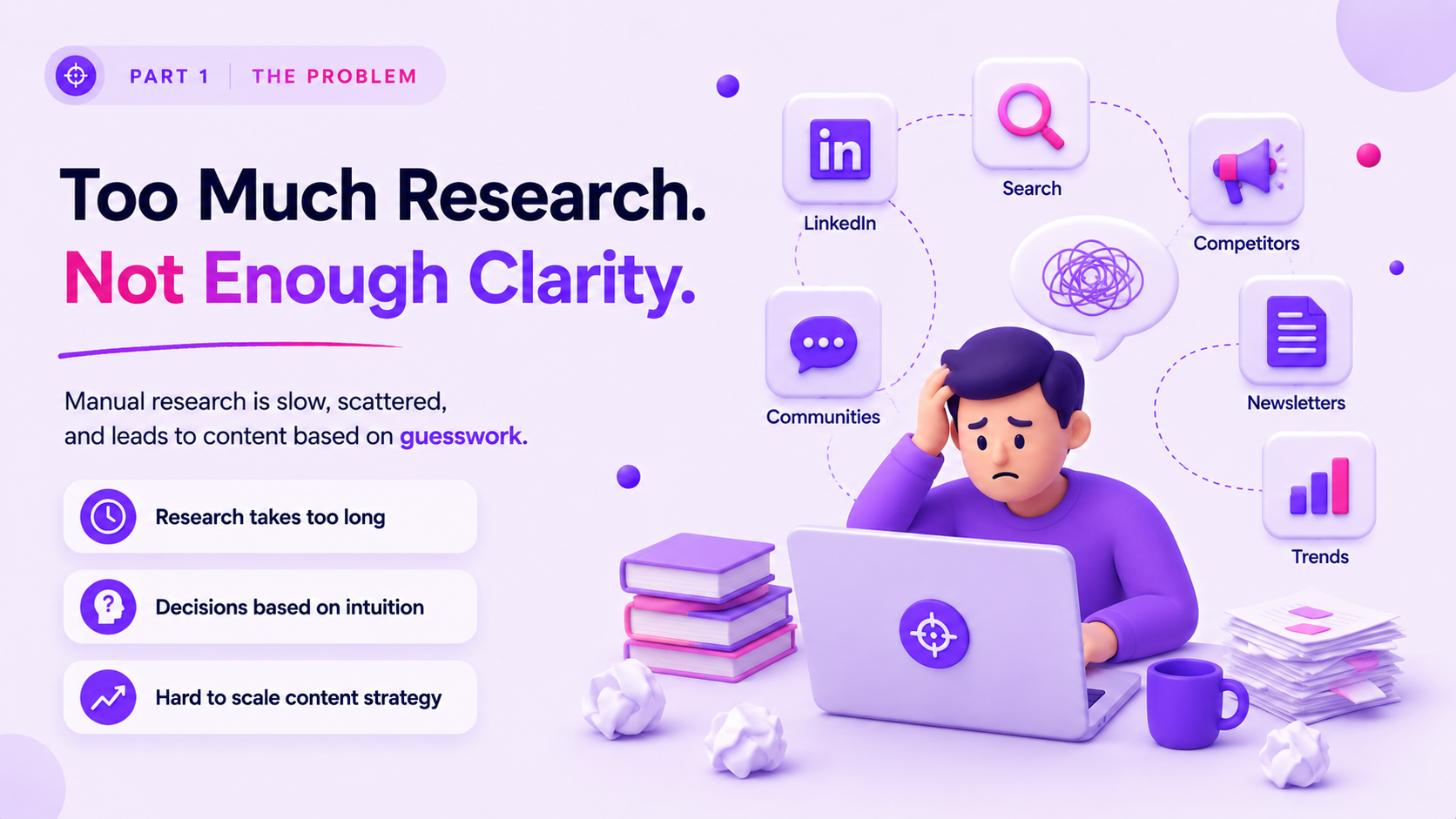
CrossLike had the same challenge many small SaaS teams face:
They needed to create high-quality content consistently, but the founders were spending too much time trying to understand what the market actually cared about.
Before using OmniSignal, the team had to manually check:
- competitor positioning;
- LinkedIn posts from top voices;
- customer pain points;
- industry trends;
- comments and discussions;
- product category changes;
- content angles that were already working.
This created three problems.
1. Research was too slow
The founders had to jump between LinkedIn, competitor websites, communities, newsletters, and search results just to understand what to post about.
By the time they found a useful angle, the trend was often already overused.
2. Content was based on intuition
Some posts worked. Some did not.
But it was hard to understand why.
Was the topic wrong?
Was the angle too generic?
Was the market already tired of it?
Was the competitor narrative stronger?
Without structured signals, content decisions were based mostly on founder instinct.
3. The team could not scale content strategy
With only two founders, every hour spent on research was an hour not spent on product, sales, support, or customer conversations.
CrossLike needed a way to move from:
“What should we post this week?”
to:
“Here are the strongest market signals and the best content opportunities right now.”
The Solution
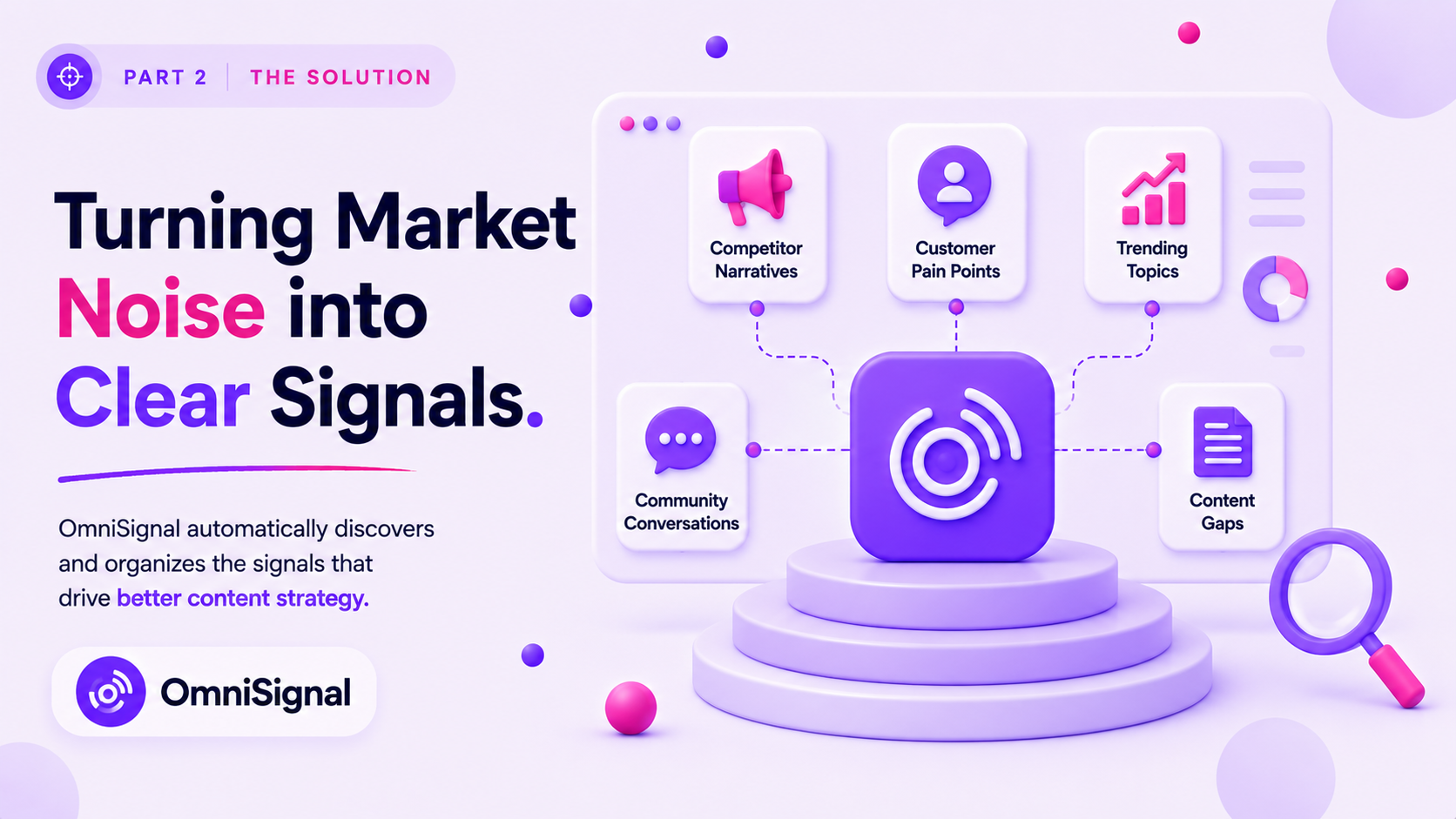
CrossLike started using OmniSignal as its signal-driven content strategy layer.
Instead of manually researching the market, the founders used OmniSignal to automatically discover and organize relevant signals across the category.
OmniSignal helped them track:
- what competitors were talking about;
- which pain points appeared repeatedly;
- what content angles were gaining attention;
- what objections potential customers had;
- which narratives were becoming saturated;
- where CrossLike could create a stronger point of view.
The goal was not just to collect more information.
The goal was to turn market noise into a clear content direction.
How OmniSignal Changed the Workflow
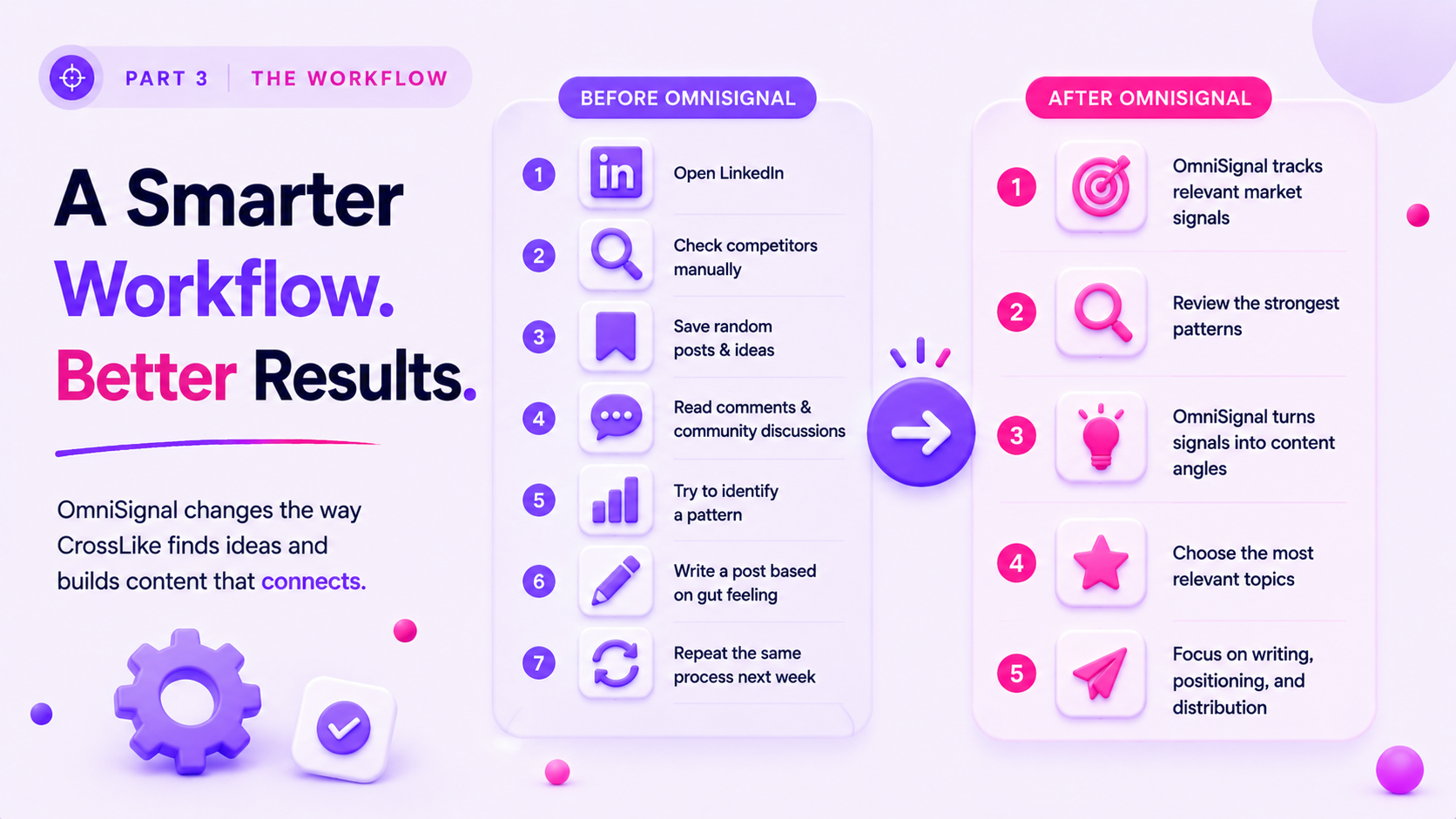
Before OmniSignal
The content workflow looked like this:
- Founder opens LinkedIn.
- Checks competitors manually.
- Saves random posts and ideas.
- Reads comments and community discussions.
- Tries to identify a pattern.
- Writes a post based on gut feeling.
- Repeats the same process again next week.
This process was slow, inconsistent, and hard to delegate.
After OmniSignal
The new workflow became:
- OmniSignal tracks relevant market signals.
- The founders review the strongest patterns.
- OmniSignal turns signals into content angles.
- The team chooses the most relevant topics.
- Founders focus on writing, positioning, and distribution.
Instead of spending hours searching for ideas, the founders started with validated market signals.
Example Signal-to-Content Flow
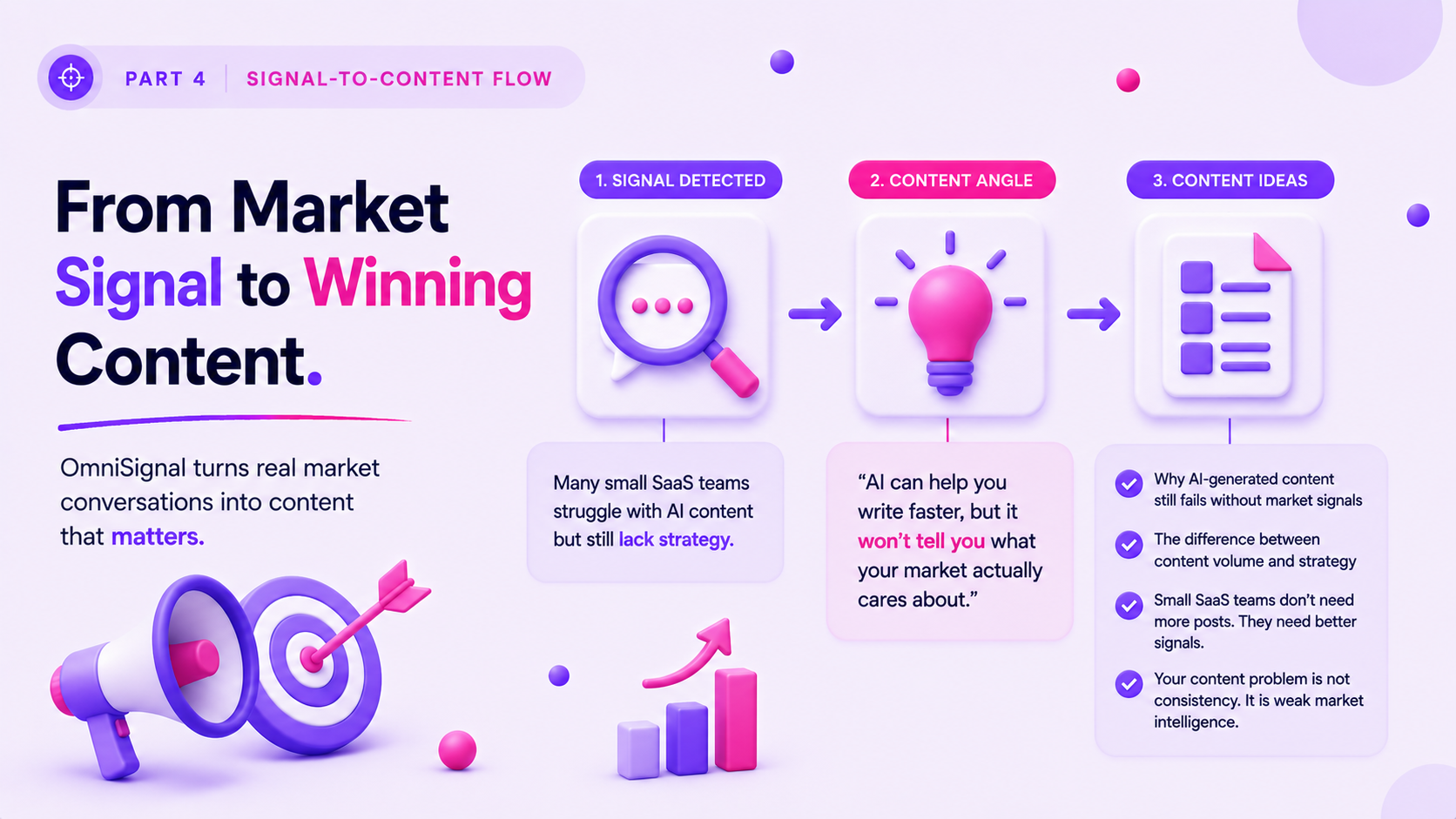
OmniSignal identified that many small SaaS teams were discussing the same hidden problem:
They were using AI tools for content creation, but still had no real content strategy.
This became a strong content angle for CrossLike:
“AI can help you write faster, but it will not tell you what your market actually cares about.”
From that signal, the founders created several content ideas:
- “Why AI-generated content still fails without market signals”
- “The difference between content volume and content strategy”
- “Small SaaS teams do not need more posts. They need better signals.”
- “Your content problem is not consistency. It is weak market intelligence.”
This gave CrossLike a sharper narrative and a more differentiated position.
The Outcome
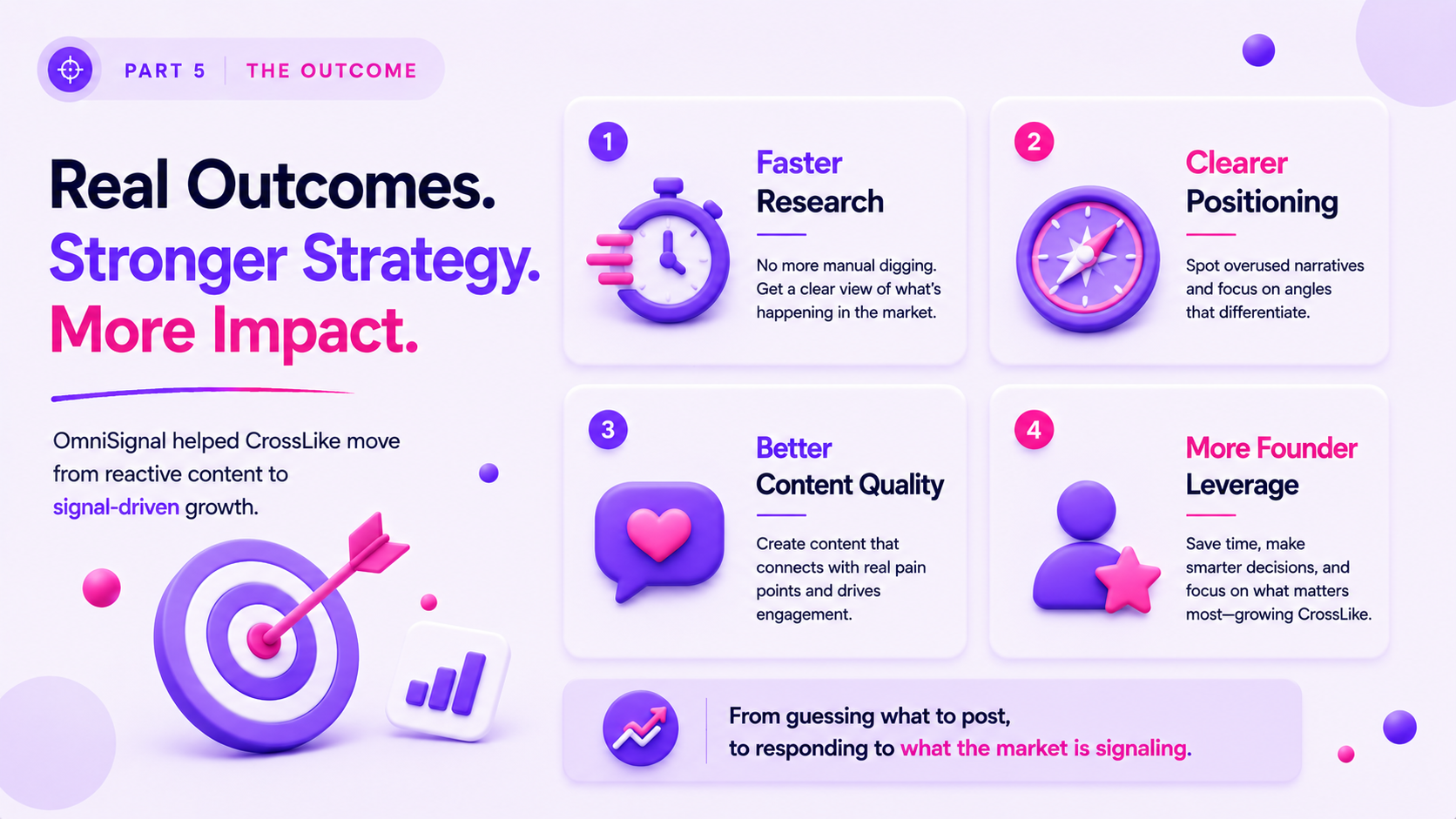
Using OmniSignal helped CrossLike move from reactive content creation to signal-based content strategy.
Key outcomes
1. Faster research
The founders no longer needed to spend hours manually scanning competitors, trends, and discussions.
OmniSignal gave them a structured view of what was happening in the market.
2. Clearer positioning
CrossLike could see which narratives were overused and where there was space for a stronger point of view.
This helped the team avoid generic content and focus on sharper, more relevant angles.
3. Better content quality
Posts became less random and more connected to real customer pain points.
The team could create content based on what the market was already signaling, not just what they wanted to say.
4. More founder leverage
For a two-person team, the biggest win was time.
OmniSignal gave the founders the kind of strategic research support that would usually require a marketing strategist, competitive analyst, or content researcher.
Final Result
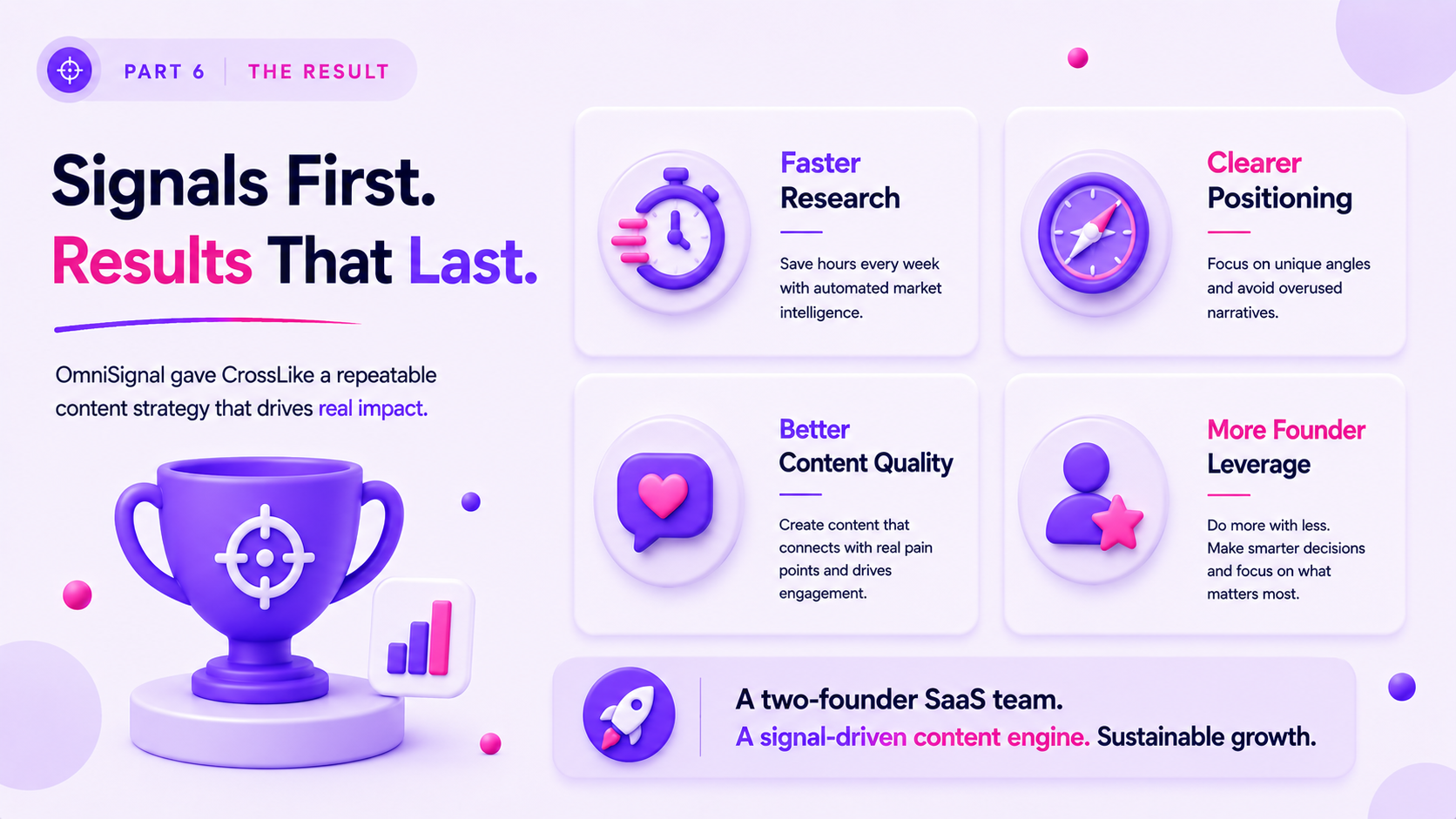
CrossLike used OmniSignal to turn scattered market information into a repeatable content strategy system.
Instead of asking:
“What should we post?”
the team started asking:
“Which market signal should we respond to?”
That shift helped a two-founder SaaS company create content with more speed, more confidence, and a stronger connection to real market demand.
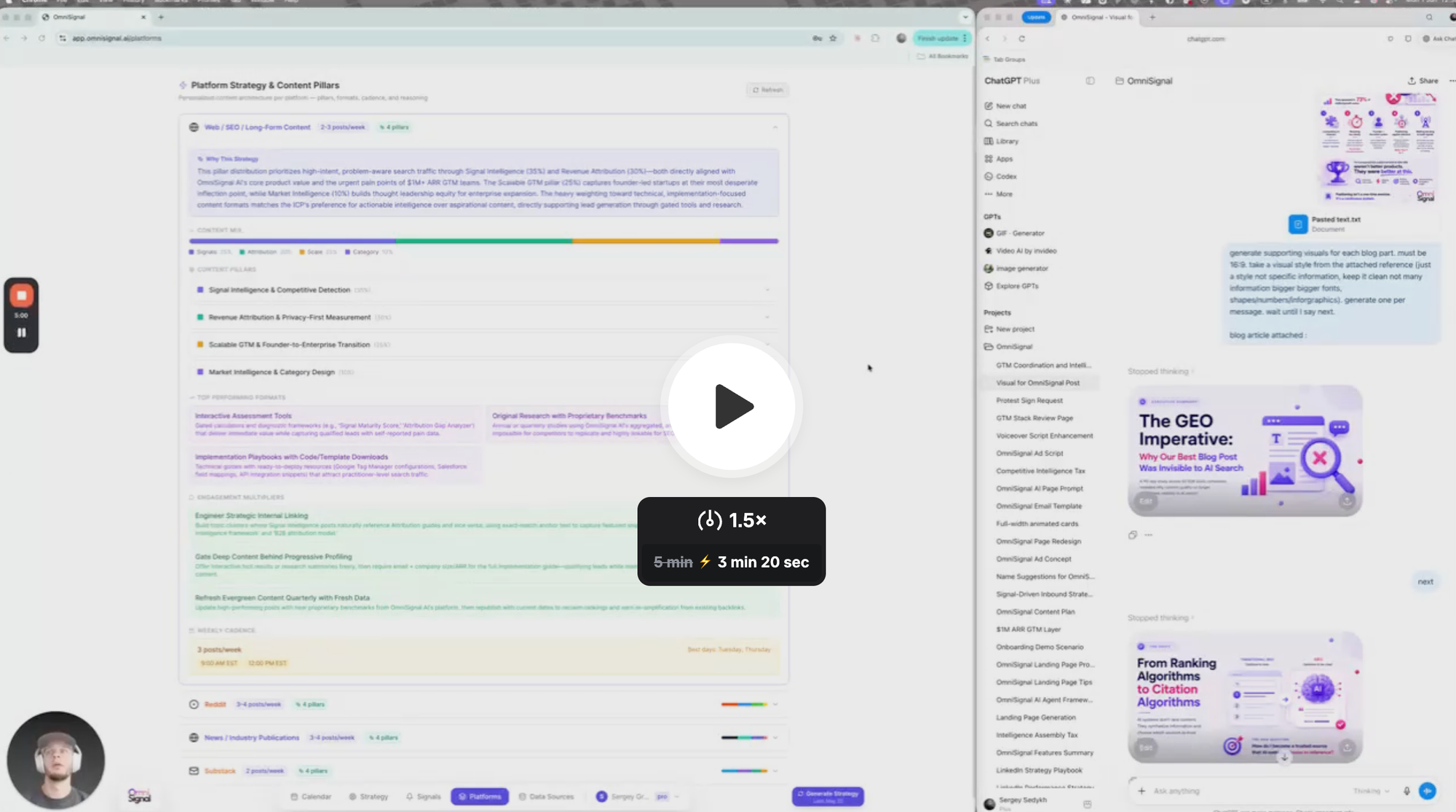
Check the video guide here ⏪⏪⏪
One-line version
OmniSignal helped CrossLike, a two-founder SaaS company, replace manual content research with automated market signals — giving the team faster strategy, sharper positioning, and better content without hiring a marketing team.