The Modern GTM Orchestration Model (2026 Edition)

Most GTM stacks don’t fail because of missing tools.
They fail because of missing sequencing.
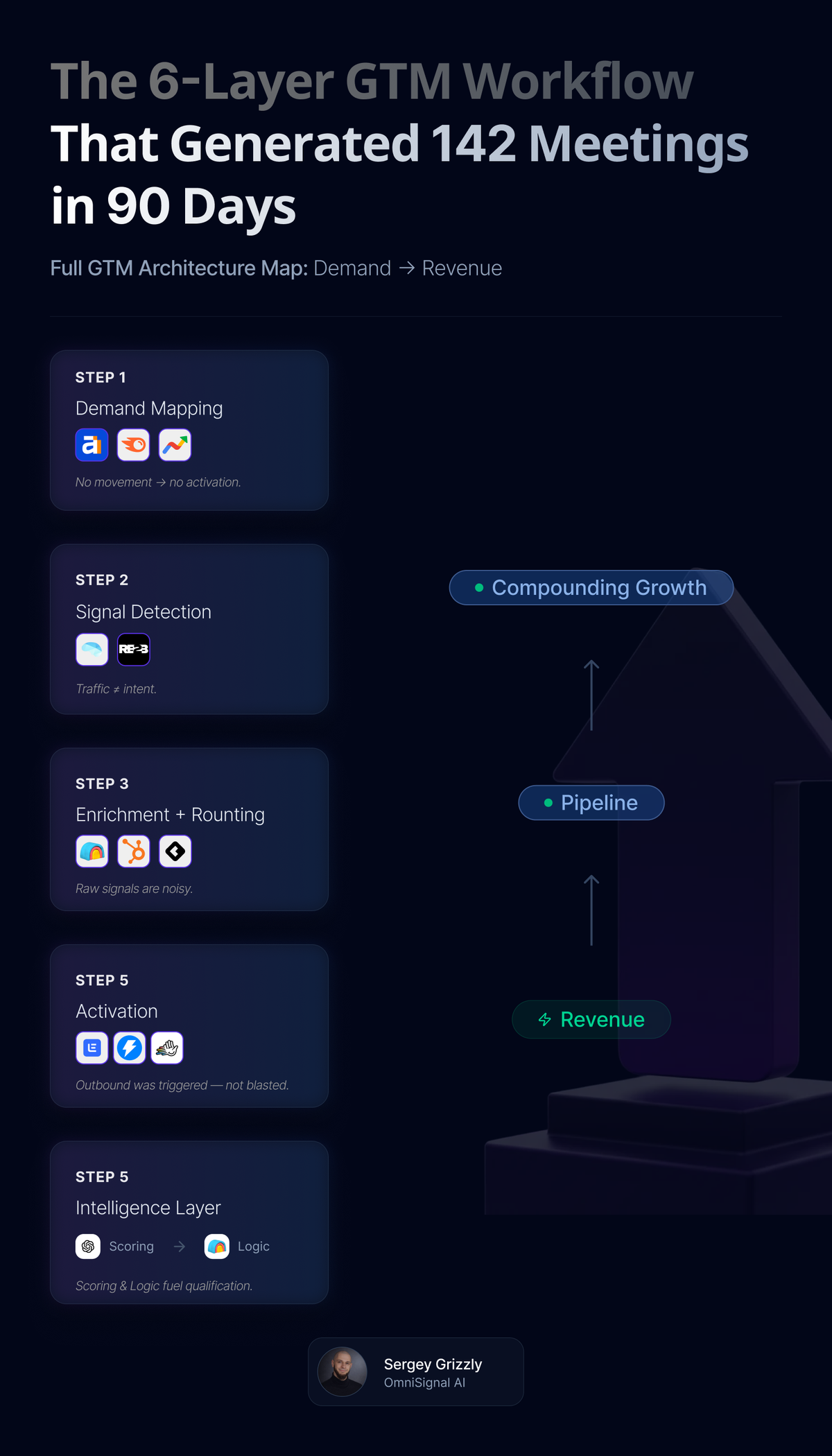
Over the past 12 months, applying this orchestration model across multiple campaigns produced:
- 142 meetings in 90 days
- −34% CAC
- 3.8x pipeline velocity
- +41% demo conversion rate
- −22% sales cycle length
The difference wasn’t “more channels.”
It was building a layered system where each tool amplified the next.
Here’s the architecture.
Layer 1: Demand Mapping
(Validate movement before creating anything)
Most teams start with content.
We start with momentum.
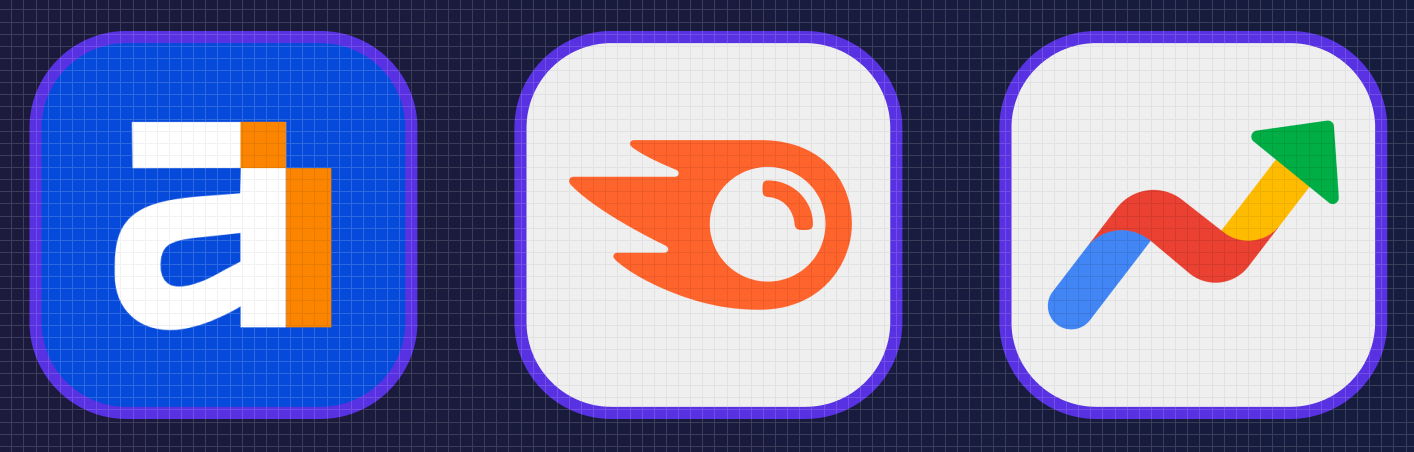
- Ahrefs → Beyond keyword research, we use Ahrefs to validate demand depth and backlink authority gaps. It tells us whether a topic has real competitive opportunity or is already saturated. It also reveals which domains dominate a category — critical for positioning decisions.
- Semrush → Semrush gives competitive velocity insights. Not just what competitors rank for — but how fast they’re publishing, which keywords are growing, and where attention is shifting. This prevents reactive content strategy.
- Google Trends → Google Trends helps identify rising interest curves before search volume peaks. It’s early signal detection for category movement, especially useful in emerging AI or GTM sub-niches.
This layer reduced wasted content production by 27%.
No movement = no leverage.
Layer 2: Signal Detection
(Act when buying windows open)
Traffic is not intent.
Signal is intent.
- ColdIQ → ColdIQ detects real-time buying indicators like hiring for specific roles, funding announcements, tech stack changes, and growth velocity. It shifts outreach from demographic targeting to timing-based activation.
- RB2B → RB2B connects anonymous website visits to real company accounts. Instead of “we had 400 visitors,” you know which companies visited, how often, and what pages they viewed.
Signal detection improved outbound reply rates by 44% in warm segments.
Timing beats personalization.

Layer 3: Enrichment + Routing
(Centralize context before scaling outreach)
Raw signals are messy.
Routing creates clarity.
- Clay → Clay aggregates dozens of enrichment sources into one structured layer. It pulls firmographic data, hiring trends, technographics, and behavioral attributes into a clean workflow. More importantly, it enables automated scoring and routing logic — not just data collection.
- HubSpot → HubSpot tracks lifecycle stages, pipeline velocity, and revenue attribution. Without CRM visibility, signal cannot translate into revenue forecasting. It also ensures sales and marketing share the same source of truth.
- Common Room → Common Room captures engagement signals across social, community, and product usage. It surfaces “silent buyers” who engage before filling out a form.
Routing reduced manual research time by 40% and increased prioritization speed 2.7x.

Layer 4: Activation
(Move when the window is open)
Outbound works — when it’s triggered.
- lemlist → lemlist enables contextual multi-step outreach across email and LinkedIn. The real advantage isn’t sending volume — it’s referencing enriched context dynamically inside messages.
- Instantly → Instantly handles email infrastructure: warm-up, deliverability optimization, domain management, and scaling campaigns safely. Without deliverability discipline, even perfect messaging fails.
- HeyReach → HeyReach allows LinkedIn outreach across multiple accounts while maintaining safe sending behavior. It reduces profile risk while scaling conversational volume.
Triggered outbound doubled positive reply rates compared to batch campaigns.
Relevance compounds.
Layer 5: The Intelligence Layer
(Decide before executing)
Most GTM stacks collect data.
Few interpret it properly.
- OpenAI → We use OpenAI to build weighted scoring logic. Accounts are graded based on ICP fit, urgency signals, engagement behavior, and historical conversion patterns. AI doesn’t replace strategy — it compresses decision-making time.
- Clay prioritization workflows → Clay’s automation engine assigns account tiers dynamically based on score changes. When new signals appear, priority updates automatically.
This intelligence layer reduced wasted outreach by 19% and increased close rates by 26%.
Tools execute.
Intelligence orchestrates.

The Orchestration Formula
Demand → Signal → Enrich → Activate → Measure → Feedback
- Each layer amplifies the next.
- Remove one layer, and the system weakens.
- Stack tools randomly, and you build complexity.
- Sequence tools intentionally, and you build leverage.
- Modern GTM isn’t about adding more.
- It’s about designing systems that compound.
If one of these layers disappeared tomorrow, which would cost you the most revenue?