The 2026 State of Social Growth & Signal Intelligence

The definitive playbook for LinkedIn (and everything that feeds it)
Social growth in 2026 isn’t about posting more. It’s about detecting the right signals, engineering early velocity, and converting attention into something you actually own.
The old era of “growth hacks” (volume, random hooks, generic engagement) is basically done. LinkedIn has matured into a neural ranking system that rewards momentum + retention + relevance.
If your reach is down, it’s not (only) your content.
It’s your distribution physics.
This guide breaks down what’s driving the feed in 2026 — and how to adapt.
1) The physics of the feed in 2026
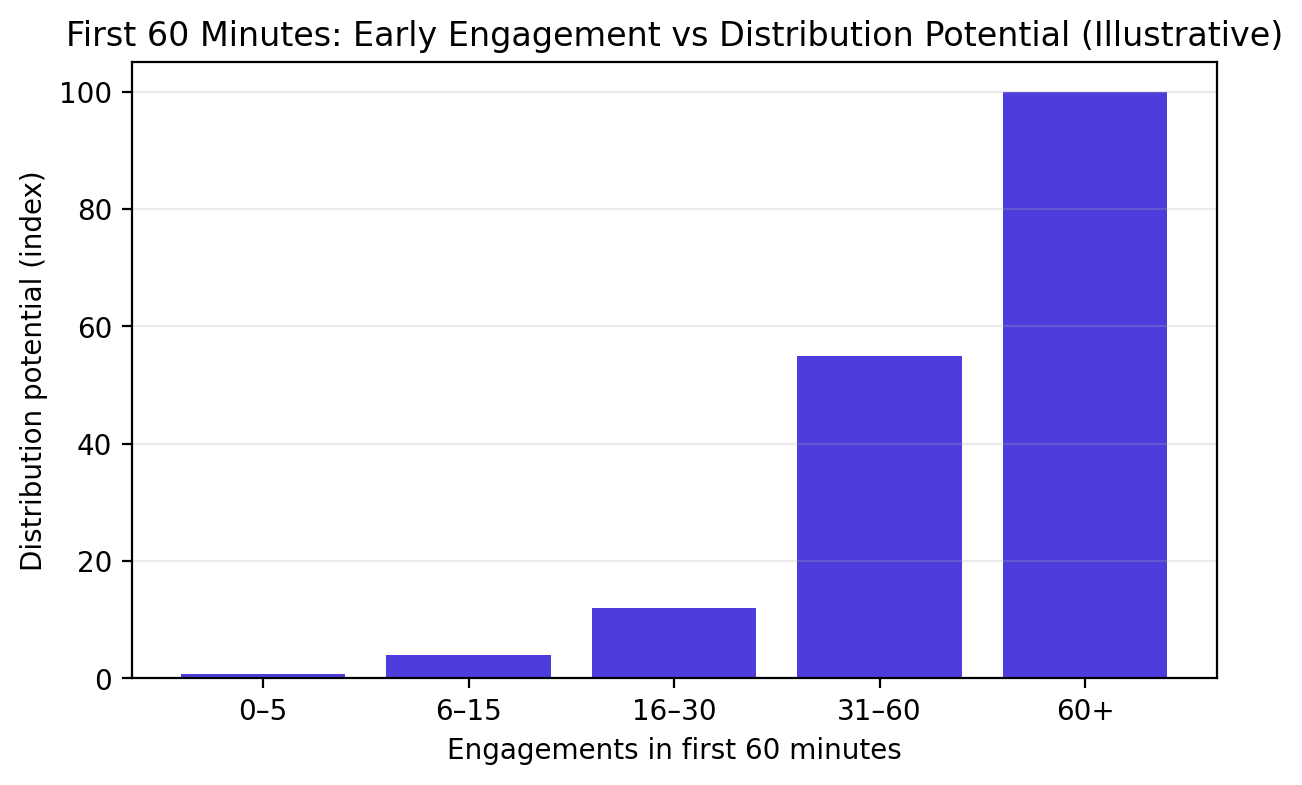
The First 60 Minutes decide the ceiling
LinkedIn now assigns a “velocity score” almost immediately. Your post enters a micro test group, and the platform asks one brutal question:
“If their closest network doesn’t care instantly — why should anyone else?”
That’s why many posts hit a visibility ceiling even when the content is good. It’s not a quality issue. It’s a signal issue.
What typically breaks the ceiling:
- A small burst of relevant engagement early (likes + real comments)
- Immediate replies that create “conversation depth”
- A pinned first comment that adds bonus value (without polluting the post body)
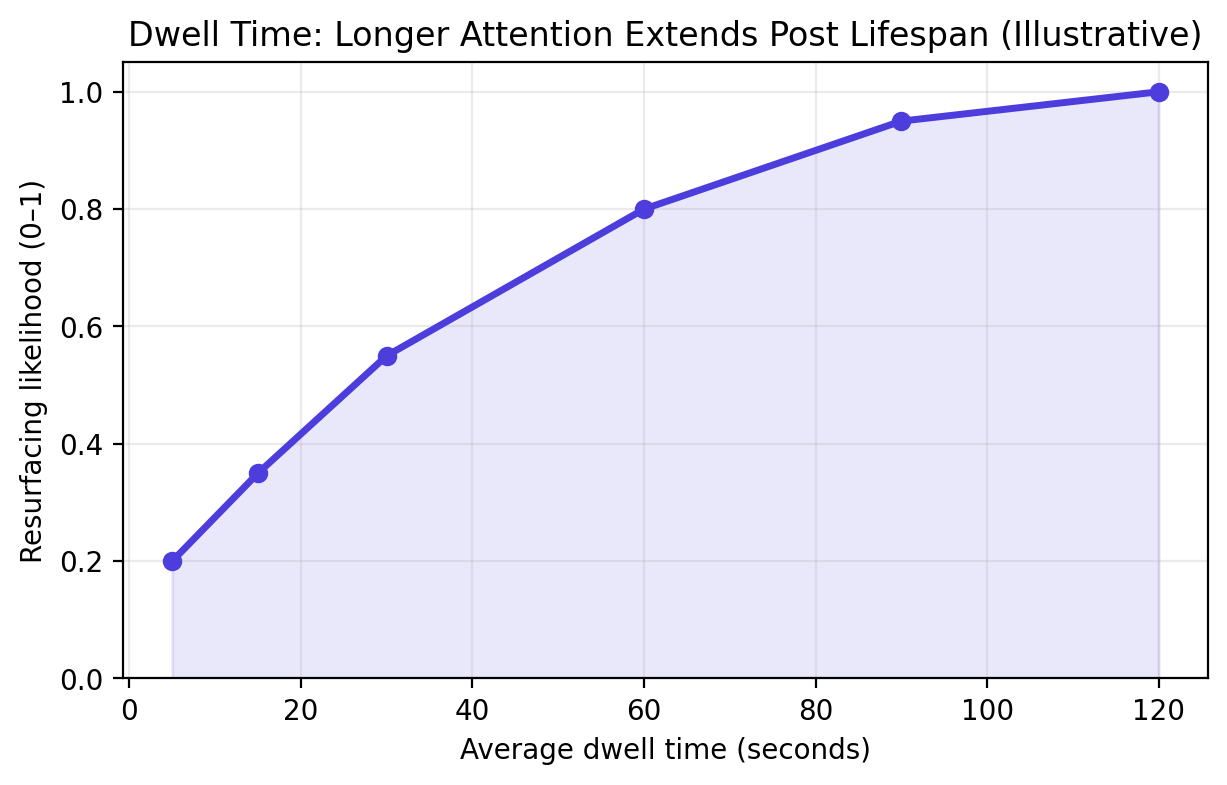
Dwell time keeps posts alive
Velocity triggers distribution.
Dwell time decides longevity.
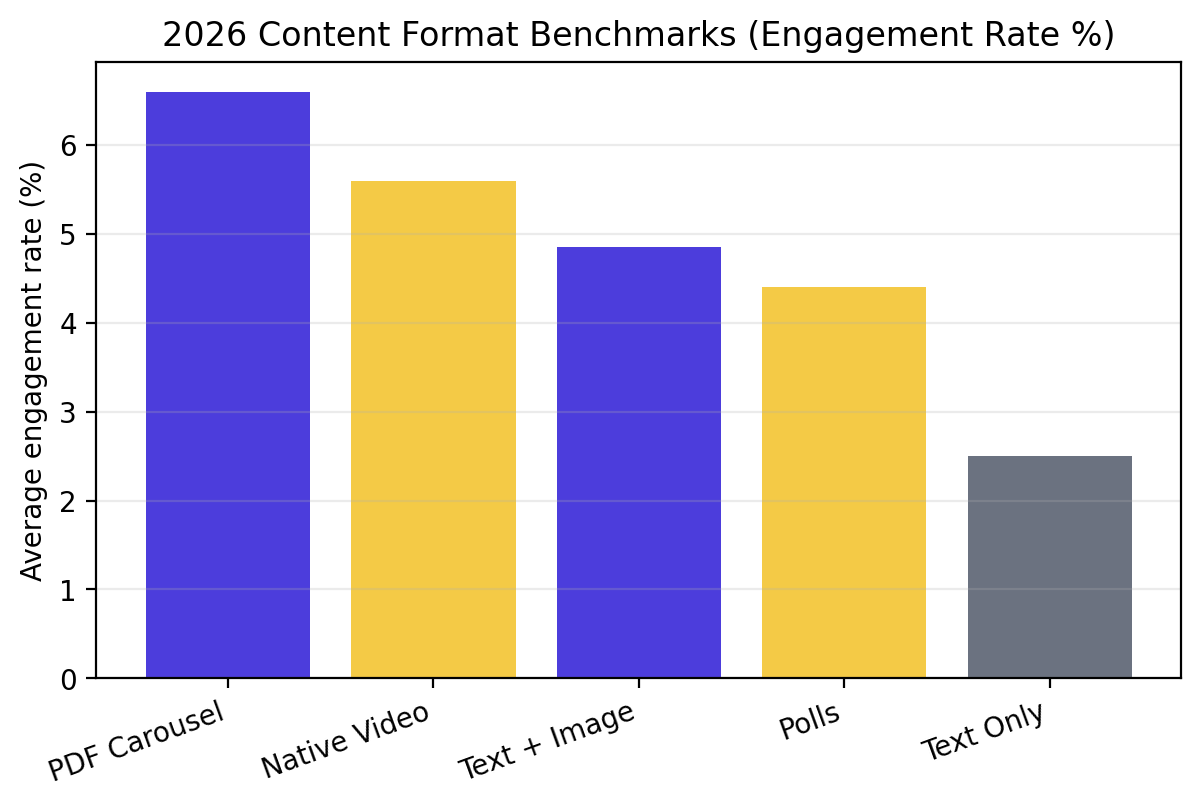
That’s why carousels/documents are still the strongest organic format: swipes naturally create 60–120 seconds of attention, and the algorithm treats that as “high-value.”
Recency is weaker; relevance is stronger
LinkedIn now resurfaces content based on topical match. “Evergreen assets” can reappear weeks later if they remain relevant and keep generating fresh engagement.
Translation: stop publishing disposable updates. Start building assets.
2) Signal intelligence is the new growth meta
In 2026, content fails less because of writing and more because of topic selection.
The strongest creators don’t brainstorm. They run “signal intelligence” like an agency.
What signal-intelligent teams monitor:
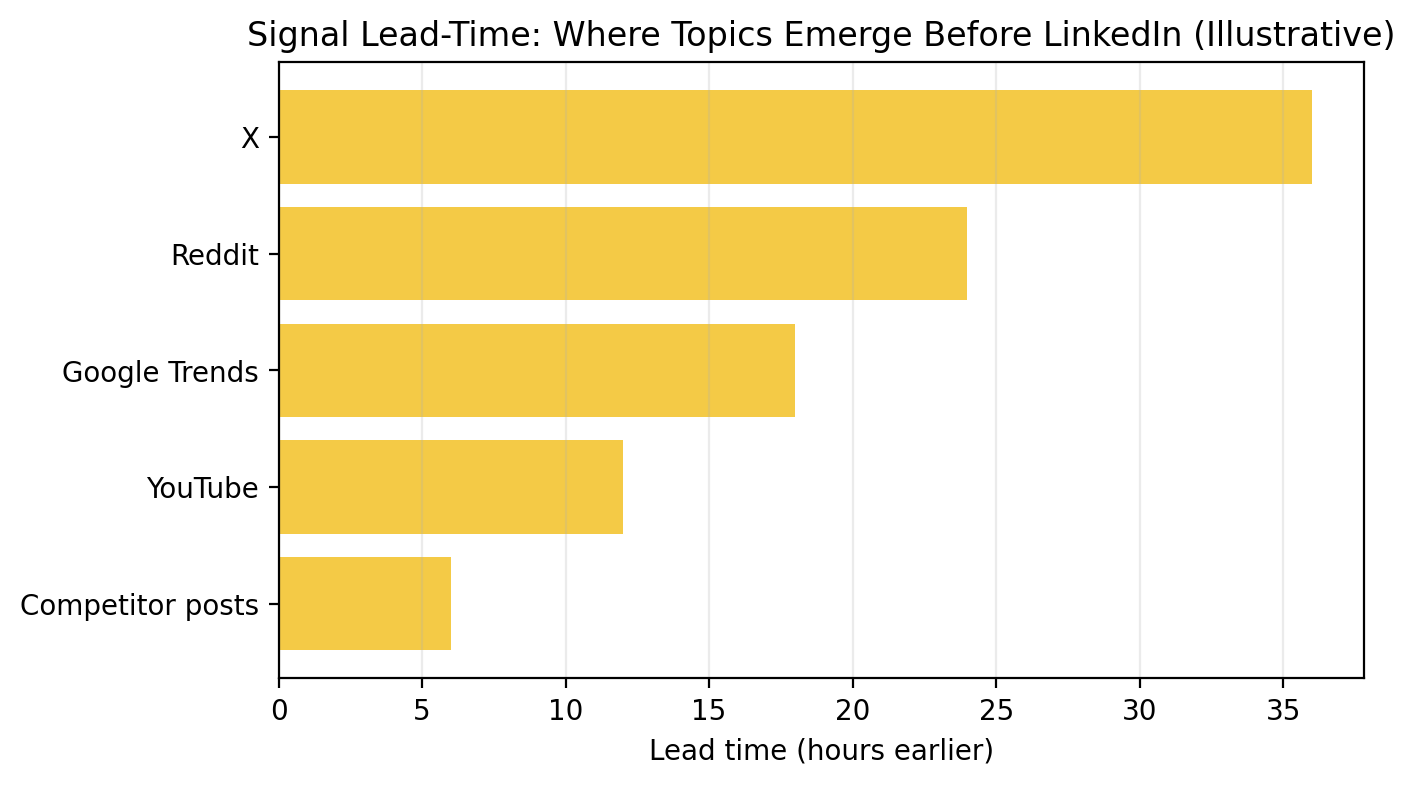
- Cross-platform arbitrage: topics often break on X/Reddit before they show up on LinkedIn
- Search velocity: Google Trends spikes show demand before social catches up
- Competitor heatmaps: what’s getting abnormal traction — and why
- Format shifts: which structure is being rewarded (carousel vs. selfie vs. short video)
This is exactly why “social growth” is merging with business intelligence. Your content calendar now starts with monitoring — not inspiration.
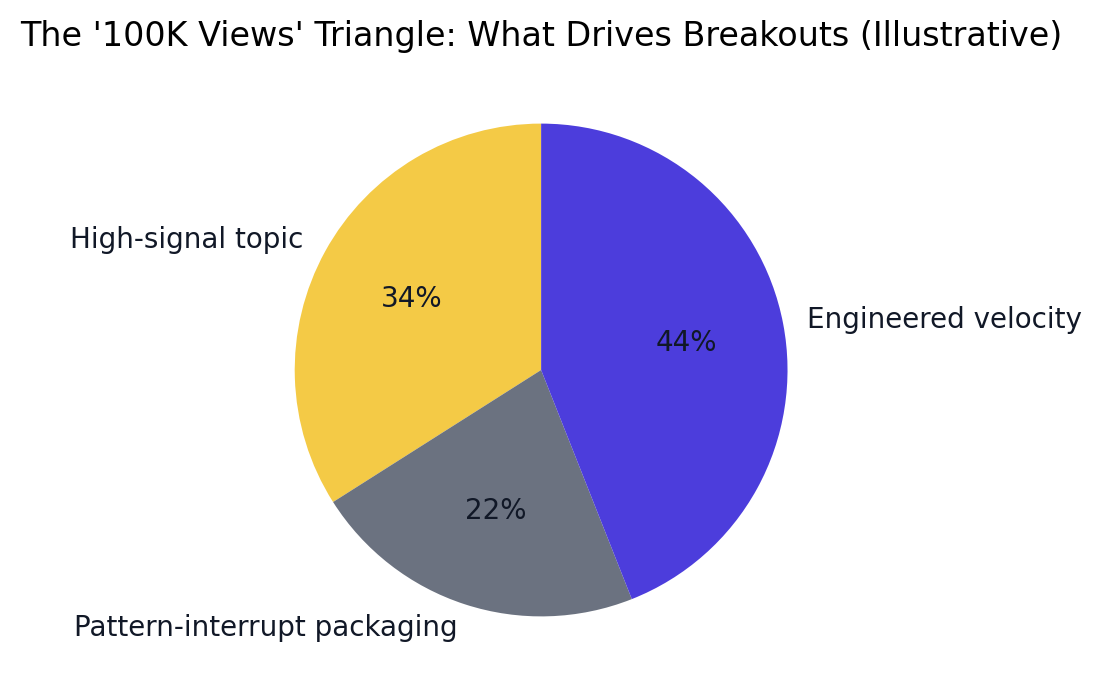
3) The 2026 “100K Views” formula
Most viral posts are not luck. They’re the convergence of three vectors:
- High-signal topic
Something people already care about right now (or are about to). - Pattern-interrupt packaging
A hook/thumbnail/visual that breaks feed monotony. - Engineered velocity
A deliberate first-hour plan to get past the ceiling.
If one vector is missing, performance collapses.
4) Content formats that win in 2026
Carousels are still the apex format
They dominate because they maximize dwell time and saves.
Anatomy of a high-performing carousel:
- Slide 1: negative urgency / specific promise (“5 mistakes costing you deals”)
- Slide 2: retention bridge (“Most people stop at step 2…”)
- Slides 3–10: micro-depth (one complete idea per slide)
- Final slide: explicit save trigger (“Save this checklist for your next campaign”)
The “contextual selfie” is the trust shortcut
Text + real photo (working, speaking, analyzing) beats stock visuals by a wide margin because it signals proof-of-work in an AI-saturated feed.
Native video is growing — but links kill reach
Short (60–90s), captioned, native uploads win.
Use “teaser strategy”: drop the best minute on LinkedIn, move links to comments/newsletter.
5) Advanced growth moves (the tactical layer)
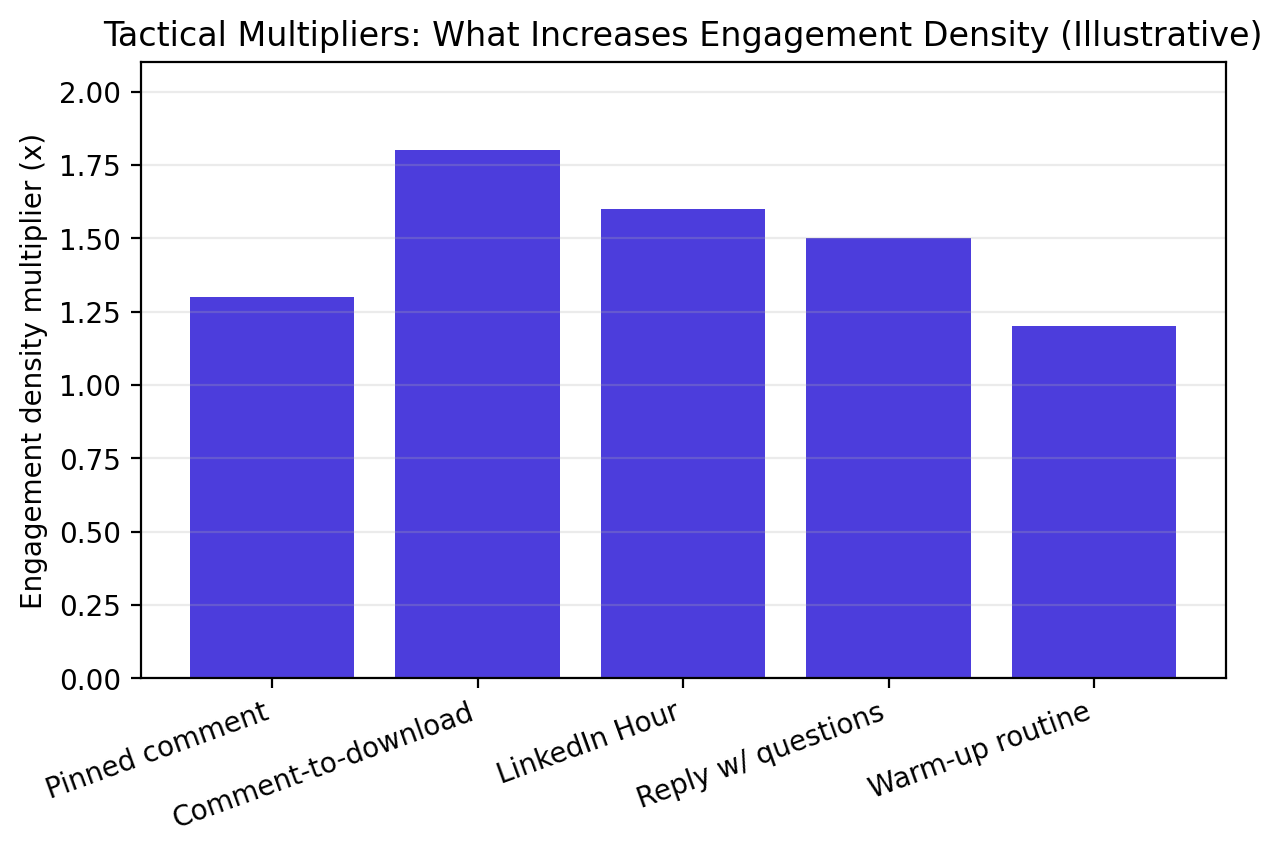
The self-pinned comment strategy
Right after publishing, add a comment that contains:
- bonus value
- a behind-the-scenes artifact
- a soft CTA (“Want the PDF version?”)
It keeps the post clean (no links) while increasing engagement density early.
Comment-to-download flywheel
Still one of the highest-performing funnels — but the new version is softer:
Instead of “Comment ME,” try:
“I turned this into a PDF so it’s easier to use. Want it?”
Then in the DM:
- deliver the asset
- end with a question
This forces a reply and strengthens the tie between accounts — which improves future distribution.
“LinkedIn Hour” routine (non-negotiable)
Treat the first hour like active work:
- T–15: comment on 5–10 niche creators (wake up the graph)
- T0: publish + pin comment
- T+60: reply fast, reply with questions, build conversation depth
6) Growth that converts: rented → owned
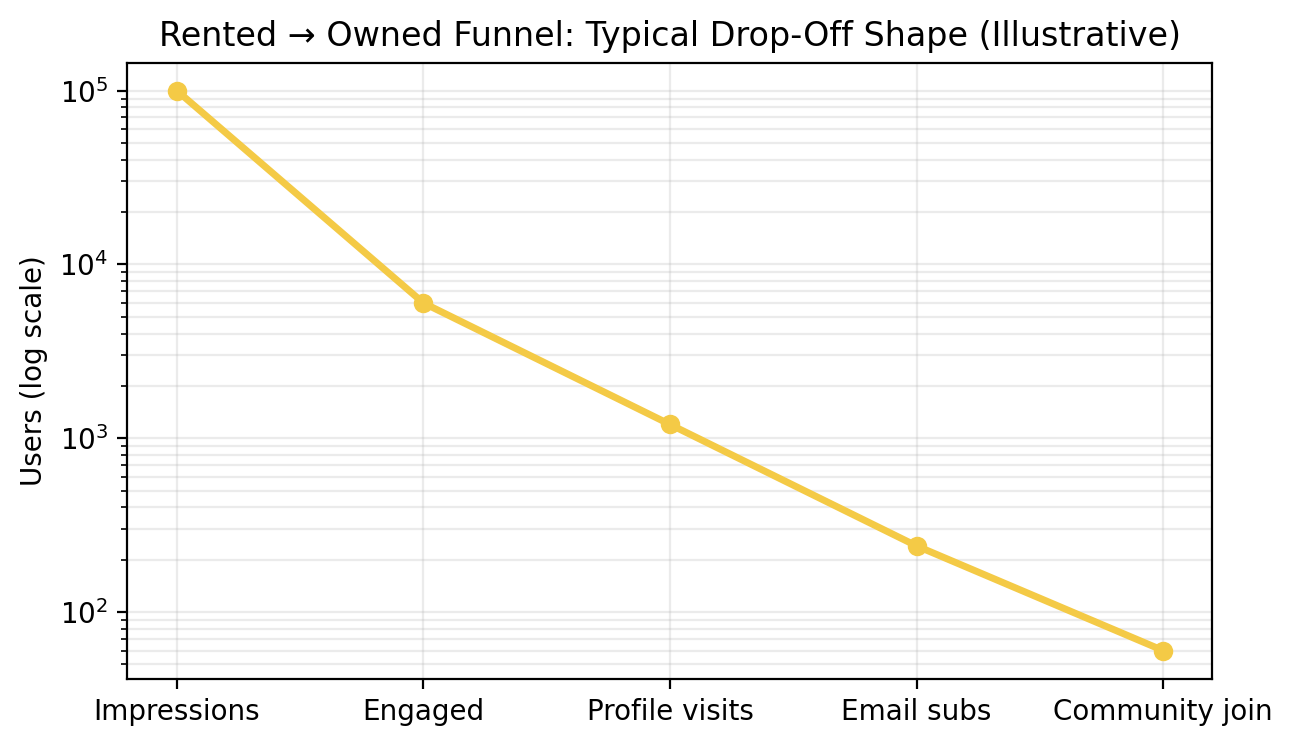
In 2026, platform reach is a vanity metric unless you convert it into something you own.
The dominant bridge: LinkedIn → newsletter → community
- Use LinkedIn’s newsletter feature to trigger native subscribe prompts
- Push deeper assets to your email platform
- Build a community moat (Skool/Circle) if you sell services, courses, or consulting
Your goal is to make algorithms your top-of-funnel, not your business model.
The 2026 playbook in one page
If you want consistent reach in 2026:
- Stop guessing topics → start running signal intelligence
- Master the first 60 minutes → engineer velocity + conversation depth
- Build assets, not updates → carousels + evergreen guides
- Humanize the brand → faces beat logos
- Move people off-platform → newsletters + community
In 2026, growth is not an art.
It’s an engineering problem.
And the best systems don’t fight the algorithm — they treat it like a force multiplier.
That's been said 👉
If you want to operationalize this playbook without turning your day into “feed babysitting,” CrossLike’s Signal layer is built to monitor cross-platform trends, detect what’s about to work, and help you launch with the velocity the algorithm demands.