How to Build an Inbound Strategy in 2026 (That Actually Drives Pipeline)

Inbound in 2026 is no longer about “posting consistently.”
It’s about building a signal-driven system that turns attention into qualified pipeline.
The algorithm changed. Buyer behavior changed. AI changed content velocity.
If you’re still running a 2021 content playbook, you’re invisible.
This guide breaks down:
- What inbound marketing looks like in 2026
- How to design a modern inbound strategy
- The tech stack that supports it
- How to connect content → signals → revenue
What Is Inbound Marketing in 2026?
Inbound marketing in 2026 is:
A structured system that attracts, qualifies, and converts buyers using real-time intent signals, authority content, and distribution automation.
Traditional inbound was:
- Blog posts
- SEO optimization
- Lead magnets
- Email nurturing
Modern inbound is:
- Signal monitoring (funding, hiring, tech changes)
- Personal brand distribution (LinkedIn-first)
- Multi-format authority content
- AI-assisted content production
- Dynamic retargeting & outreach
The biggest shift?
Inbound and outbound are no longer separate.
Inbound generates signals.
Outbound activates them.
Step 1: Define Your Strategic Positioning
Before content. Before tools.
You need:
- Clear ICP (industry, company size, trigger events)
- Pain that is expensive enough to solve
- POV that differentiates you
If your positioning is generic, inbound won’t work.
Ask:
- What mistake is my market making in 2026?
- What outdated belief can I challenge?
- What system do I offer instead?
Authority > frequency.
Step 2: Build a Signal Layer (Intent-Based Inbound)
Inbound in 2026 is signal-driven.
Instead of creating random content, you align content with:
- Funding rounds
- Hiring spikes
- Product launches
- Stack changes
- Market shifts
Tools that support this:
- Google Trends – Detect macro search demand shifts
- SparkToro – Understand audience behavior & media consumption
- ColdIQ – Identify buyer signals at scale
- Clay – Enrich leads with contextual data
The goal isn’t traffic.
The goal is timed relevance.
Step 3: Design a Content Engine (LinkedIn-First in B2B)
In 2026, B2B inbound is personal-brand-driven.
LinkedIn remains the highest-leverage platform for:
- Founder-led growth
- GTM positioning
- Authority building
- Warm pipeline generation
Your content mix should include:
- POV posts (challenge industry assumptions)
- System breakdowns (show your methodology)
- Case studies (revenue-linked proof)
- Tactical posts (operational insights)
- Signal commentary (react to market shifts)
Support tools:
- Canva – Fast visual assets
- Buffer – Content scheduling
- Hootsuite – Multi-channel publishing
- Gamma – Slide-based thought leadership
But tools don’t create strategy.
Structure does.
Step 4: Convert Attention Into Owned Audience
Attention is rented.
Email is owned.
In 2026, your inbound system should include:
- High-value lead magnets (frameworks > PDFs)
- Webinar loops
- Newsletter sequences
- Free audits
- Reverse trials
Don’t gate weak content.
Gate structured value.
Modern email stack example:
Inbound and outbound converge here.
Step 5: Build the Inbound → Pipeline Bridge
Most inbound strategies fail here.
They generate impressions.
Not revenue.
You need:
- Signal scoring
- Lead prioritization
- Sales alignment
- Feedback loop to content
Example logic:
- Funding + hiring + website visit = High intent
- Engaged with 3 posts + downloaded resource = Warm
- Viewed pricing page twice = Sales trigger
Instead of guessing interest, you measure it.
Step 6: Measure the Right Inbound KPIs in 2026
Vanity metrics are dead.
Track:
- Signal-qualified leads (SQL)
- Content-to-meeting conversion rate
- ICP traffic share
- Engagement depth (not just likes)
- Pipeline generated from inbound
If impressions grow but pipeline doesn’t — your positioning is wrong.
If engagement is high but meetings are low — your conversion layer is weak.
If meetings are high but close rate is low — your ICP is misaligned.
Inbound is diagnostic.
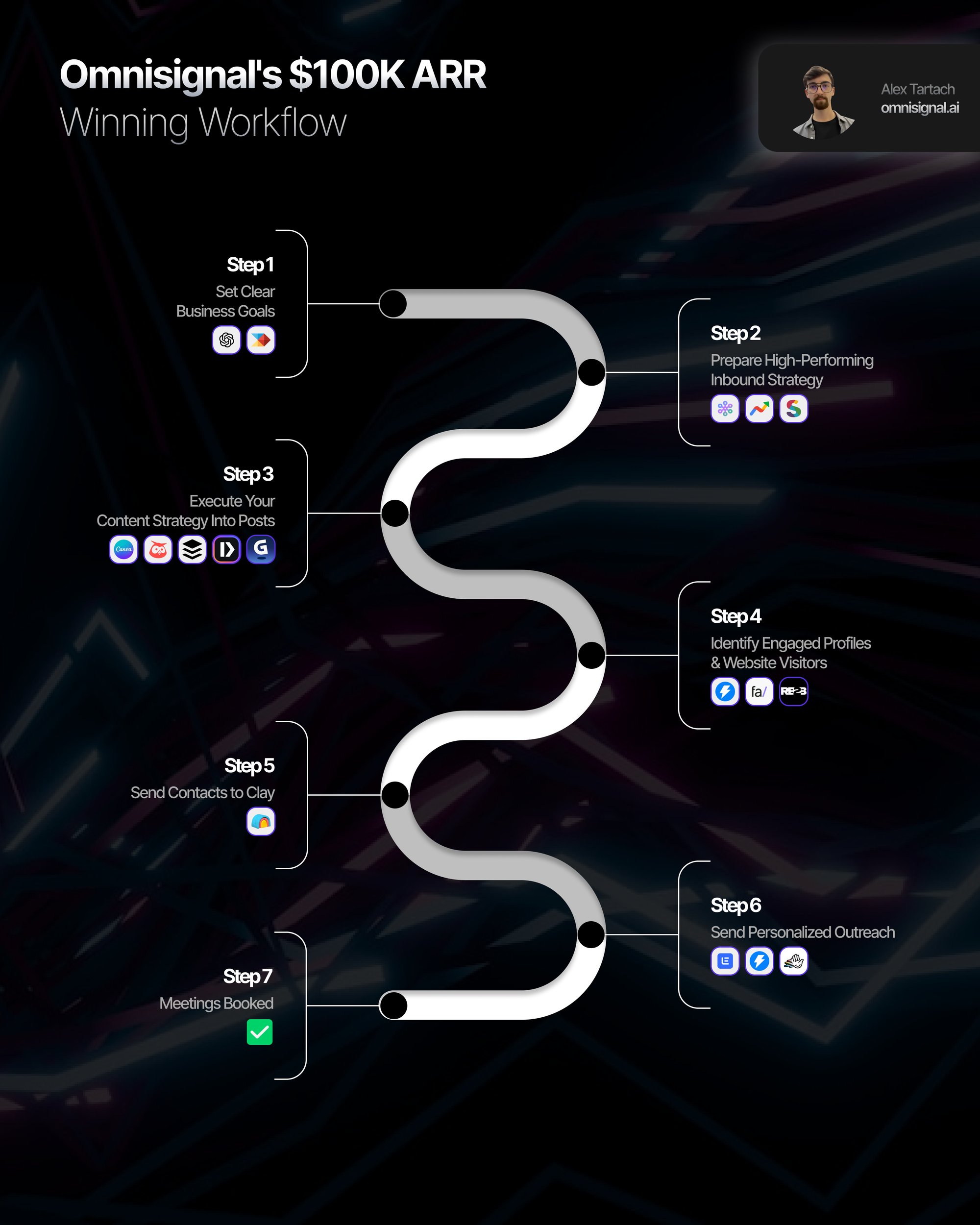
The 2026 Inbound Stack (Example)
Strategy & Research
- Google Trends
- SparkToro
Signal & Enrichment
- ColdIQ
- Clay
Content Production
- Canva
- Gamma
Distribution
- Buffer / Hootsuite
Activation
- Instantly
- Lemlist
Tools are modular.
Architecture matters more than the tools.
Why Most Inbound Strategies Fail
- No signal prioritization
- Content without POV
- No conversion bridge
- No sales feedback loop
- Overproduction without distribution
Inbound is not about more content.
It’s about structured authority + timed activation.
How to Build an Inbound Strategy That Scales in 2026
To summarize:
- Define sharp positioning
- Layer signal intelligence
- Build LinkedIn-first authority
- Capture owned audience
- Score & activate intent
- Close feedback loop
Inbound becomes predictable when it’s structured.
Final Thought
In 2026, inbound marketing is no longer a content strategy.
It’s a signal-powered revenue system.
If you want inbound to generate pipeline, not just impressions:
You need structure.
You need signal.
You need timing.
You need a system that connects them all.
If you're building inbound for a B2B SaaS in 2026 — this is your blueprint.
The rest is execution.